
Search
4 results for Bernard Verley
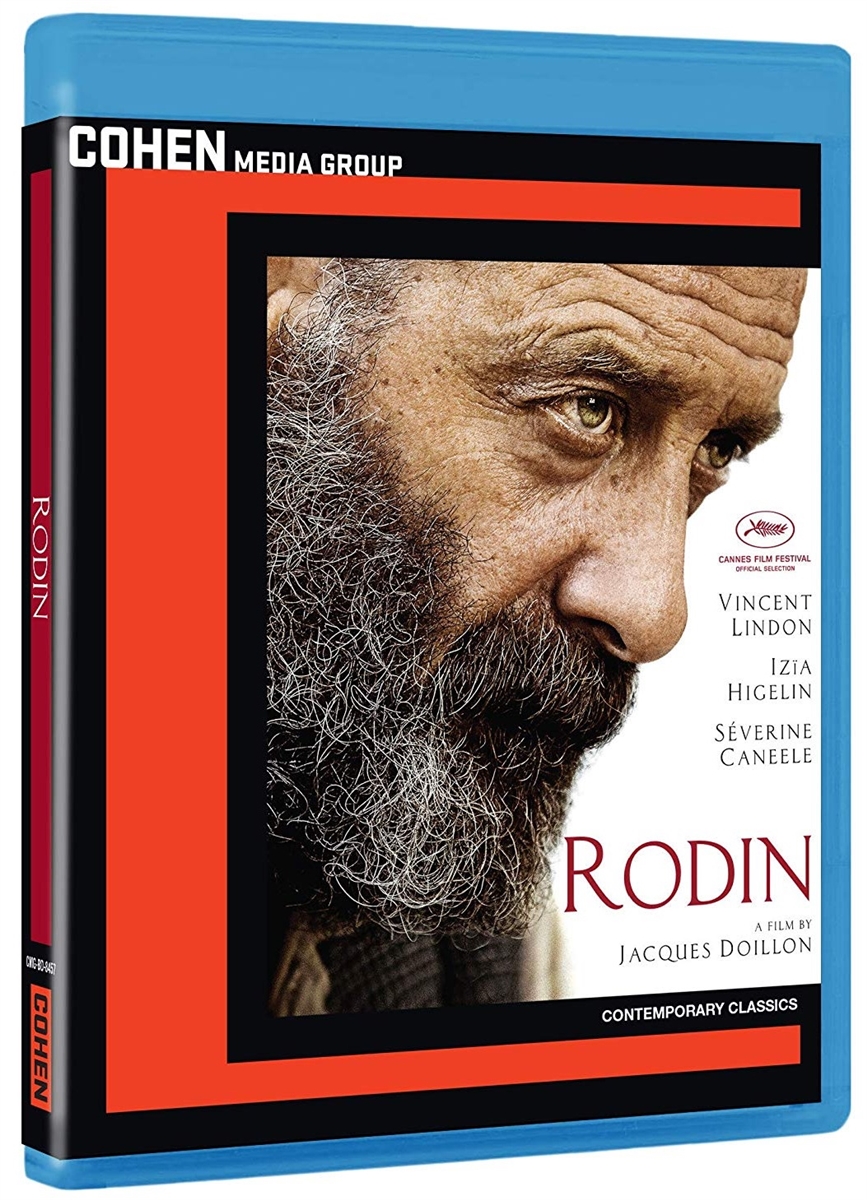
Rodin 08/18 Blu-ray (Rental)
$7.99
Format: Blu-ray
Stock: In Stock
Release: October 2, 2018
Description
Paris, 1880. 40 year-old Rodin (Vincent Lindon) finally receives his first state commission, “The Gates of Hell,” which will include “The Kiss” and “The Thinker,” two of his most famous creations. Constantly working, he shares his life with his lifelong partner, Rose (Séverine Caneele) and his mistress, the young Camille Claudel (Izïa Higelin,) the gifted student who becomes his assistant and a talented sculptor in her own right during a decade of passion, mutual admiration and creative collaboration. Following their painful break up, Rodin continues to work relentlessly while facing both the rejection and enthusiasm provoked by the sensuality and originality of his sculptures. Top About this item Similar From the Brand Reviews Rodin

Six Moral Tales - Bakery Girl of Monceau & Suzanne's Career 08/20 Blu-ray (Rental)
$7.99
Format: Blu-ray
Stock: In Stock
Release: May 5, 2020
Description
The multifaceted, deeply personal work of Eric Rohmer has had an effect on cinema unlike any other. One of the founding critics of the history-making Cahiers du cinéma, Rohmer began translating his written manifestos to film in the 1960s, standing apart from his New Wave contemporaries with his patented brand of gently existential, hyperarticulate character studies set against vivid seasonal landscapes. This near genre unto itself was established with the audacious and wildly influential series Six Moral Tales. A succession of encounters between fragile men and the women who tempt them, Six Moral Tales unleashed on the film world a new voice, one that was at once sexy, philosophical, modern, daring, nonjudgmental, and liberating. THREE-BLU-RAY SPECIAL EDITION FEATURES • New 2K digital restorations, with uncompressed monaural soundtracks • Conversation between director Eric Rohmer and filmmaker Barbet Schroeder from 2006 • Four short films by Rohmer—Presentation, or Charlotte and Her Steak (shot in 1951 and completed in 1961); Véronique and Her Dunce (1958); Nadja in Paris (1964); A Modern Coed (1966)—and one on which he advised, The Curve (1999) • “On Pascal,” a 1965 episode of the educational TV series En profil dans le texte directed by Rohmer, on the French philosopher Blaise Pascal, the subject of debate in My Night at Maud’s • Archival interviews with Rohmer; actors Jean-Claude Brialy, Béatrice Romand, Laurence de Monaghan, and Jean--Louis Trintignant; film critic Jean Douchet; and producer Pierre Cottrell • Video afterword from 2006 by filmmaker and writer Neil LaBute • Trailers • PLUS: A booklet featuring essays by critics Geoff Andrew, Ginette Vincendeau, Phillip Lopate, Kent Jones, Molly Haskell, and Armond White; excerpts from cinematographer Nestor Almendros’s 1980 autobiography; and Rohmer’s landmark 1948 essay “For a Talking Cinema”; along with an English translation of Six Moral Tales, the book of stories by Rohmer on which the films are based THE BAKERY GIRL OF MONCEAU Delicate and jazzy, The Bakery Girl of Monceau, the first entry in the Six Moral Tales series, evinces stirrings of what would become the Eric Rohmer style: unfussy naturalistic shooting, ironic first-person voice-over, and an “unknowable” woman. A law student (played by producer and future director Barbet Schroeder) with a roving eye and a large appetite stuffs himself with sugary pastries daily in order to gain the affection of a pretty brunette who works in a quaint Paris bakery. But is he truly interested, or is she just a sweet diversion? SUZANNE’S CAREER Bertrand bides his time in a casually hostile and envious friendship with Guillaume. But when Guillaume seems to be making a play for the spirited, independent Suzanne, Bertrand watches dis-approvingly. With its ragged black-and-white 16 mm photography and strong sense of 1960s Paris, Suzanne’s Career, the second of Eric Rohmer’s Six Moral Tales, is a wonderfully evocative portrait of youthful naivete and the complicated bonds of friendship and romance. MY NIGHT AT MAUD’S In My Night at Maud’s, the brilliantly accomplished centerpiece of the Six Moral Tales series, Jean-Louis Trintignant plays Jean-Louis, one of the great conflicted figures of 1960s cinema. A Catholic engineer in his early thirties, he lives by a strict moral code and immerses himself in mathematics and the philosophy of Blaise Pascal. After spotting the delicate Françoise at Mass, he vows to make her his wife, although when he spends an unplanned night at the apartment of the bold divorcée Maud, his rigid standards are challenged. LA COLLECTIONNEUSE A bombastic, womanizing art dealer and his painter friend go to a seventeenth-century villa on the Riviera for a relaxing summer getaway. But their idyll is disturbed by the presence of the bohemian Haydée, accused of being a “collector” of men. Eric Rohmer’s first color film, La collectionneuse pushes Six Moral Tales into new, darker realms while showcasing the clever, delectably ironic battle-of-the-sexes repartee (in a script written by Rohmer and the three main actors) and effortlessly luscious Nestor Almendros photography that would define the remainder of the series. CLAIRE’S KNEE “Why would I tie myself to one woman?” asks Jerôme in Claire’s Knee, though he plans to marry a diplomat’s daughter by summer’s end. He spends his July at a lakeside boardinghouse, nursing crushes on the sixteen-year-old Laura and, more tantalizingly, her long-legged, blonde, older half sister, Claire. Baring her knee on a ladder under a blooming cherry tree, Claire unwittingly incites a moral crisis for Jerôme while creating an image that is both the iconic emblem of Eric Rohmer’s Six Moral Tales and one of French cinema’s most enduring moments. LOVE IN THE AFTERNOON Though happily married to the adoring Hélène and expecting a second child with her, the thoroughly bourgeois executive Frédéric cannot banish from his mind the attractive Paris women he sees every day. His flirtations and fantasies remain harmless until the appearance at his office of Chloé, an audacious, unencumbered old flame played by the mesmerizing Zouzou. Love in the Afternoon, the luminous final chapter in Eric Rohmer’s Six Moral Tales, is a tender, sobering, and wholly adult affair that leads to perhaps the most overwhelmingly emotional moment in the entire series. Top About this item Similar From the Brand Reviews Six Moral Tales (The Bakery Girl of Monceau / Suzanne’s Career / My Night at Maud’s / La collectionneuse / Claire’s Knee / Love in the Afternoon) (The Criterion Collection) [Blu-ray]

Six Moral Tales - Claire's Knee & Love in the Afternoon 08/20 Blu-ray (Rental)
$7.99
Format: Blu-ray
Stock: In Stock
Release: May 5, 2020
Description
The multifaceted, deeply personal work of Eric Rohmer has had an effect on cinema unlike any other. One of the founding critics of the history-making Cahiers du cinéma, Rohmer began translating his written manifestos to film in the 1960s, standing apart from his New Wave contemporaries with his patented brand of gently existential, hyperarticulate character studies set against vivid seasonal landscapes. This near genre unto itself was established with the audacious and wildly influential series Six Moral Tales. A succession of encounters between fragile men and the women who tempt them, Six Moral Tales unleashed on the film world a new voice, one that was at once sexy, philosophical, modern, daring, nonjudgmental, and liberating. THREE-BLU-RAY SPECIAL EDITION FEATURES • New 2K digital restorations, with uncompressed monaural soundtracks • Conversation between director Eric Rohmer and filmmaker Barbet Schroeder from 2006 • Four short films by Rohmer—Presentation, or Charlotte and Her Steak (shot in 1951 and completed in 1961); Véronique and Her Dunce (1958); Nadja in Paris (1964); A Modern Coed (1966)—and one on which he advised, The Curve (1999) • “On Pascal,” a 1965 episode of the educational TV series En profil dans le texte directed by Rohmer, on the French philosopher Blaise Pascal, the subject of debate in My Night at Maud’s • Archival interviews with Rohmer; actors Jean-Claude Brialy, Béatrice Romand, Laurence de Monaghan, and Jean--Louis Trintignant; film critic Jean Douchet; and producer Pierre Cottrell • Video afterword from 2006 by filmmaker and writer Neil LaBute • Trailers • PLUS: A booklet featuring essays by critics Geoff Andrew, Ginette Vincendeau, Phillip Lopate, Kent Jones, Molly Haskell, and Armond White; excerpts from cinematographer Nestor Almendros’s 1980 autobiography; and Rohmer’s landmark 1948 essay “For a Talking Cinema”; along with an English translation of Six Moral Tales, the book of stories by Rohmer on which the films are based THE BAKERY GIRL OF MONCEAU Delicate and jazzy, The Bakery Girl of Monceau, the first entry in the Six Moral Tales series, evinces stirrings of what would become the Eric Rohmer style: unfussy naturalistic shooting, ironic first-person voice-over, and an “unknowable” woman. A law student (played by producer and future director Barbet Schroeder) with a roving eye and a large appetite stuffs himself with sugary pastries daily in order to gain the affection of a pretty brunette who works in a quaint Paris bakery. But is he truly interested, or is she just a sweet diversion? SUZANNE’S CAREER Bertrand bides his time in a casually hostile and envious friendship with Guillaume. But when Guillaume seems to be making a play for the spirited, independent Suzanne, Bertrand watches dis-approvingly. With its ragged black-and-white 16 mm photography and strong sense of 1960s Paris, Suzanne’s Career, the second of Eric Rohmer’s Six Moral Tales, is a wonderfully evocative portrait of youthful naivete and the complicated bonds of friendship and romance. MY NIGHT AT MAUD’S In My Night at Maud’s, the brilliantly accomplished centerpiece of the Six Moral Tales series, Jean-Louis Trintignant plays Jean-Louis, one of the great conflicted figures of 1960s cinema. A Catholic engineer in his early thirties, he lives by a strict moral code and immerses himself in mathematics and the philosophy of Blaise Pascal. After spotting the delicate Françoise at Mass, he vows to make her his wife, although when he spends an unplanned night at the apartment of the bold divorcée Maud, his rigid standards are challenged. LA COLLECTIONNEUSE A bombastic, womanizing art dealer and his painter friend go to a seventeenth-century villa on the Riviera for a relaxing summer getaway. But their idyll is disturbed by the presence of the bohemian Haydée, accused of being a “collector” of men. Eric Rohmer’s first color film, La collectionneuse pushes Six Moral Tales into new, darker realms while showcasing the clever, delectably ironic battle-of-the-sexes repartee (in a script written by Rohmer and the three main actors) and effortlessly luscious Nestor Almendros photography that would define the remainder of the series. CLAIRE’S KNEE “Why would I tie myself to one woman?” asks Jerôme in Claire’s Knee, though he plans to marry a diplomat’s daughter by summer’s end. He spends his July at a lakeside boardinghouse, nursing crushes on the sixteen-year-old Laura and, more tantalizingly, her long-legged, blonde, older half sister, Claire. Baring her knee on a ladder under a blooming cherry tree, Claire unwittingly incites a moral crisis for Jerôme while creating an image that is both the iconic emblem of Eric Rohmer’s Six Moral Tales and one of French cinema’s most enduring moments. LOVE IN THE AFTERNOON Though happily married to the adoring Hélène and expecting a second child with her, the thoroughly bourgeois executive Frédéric cannot banish from his mind the attractive Paris women he sees every day. His flirtations and fantasies remain harmless until the appearance at his office of Chloé, an audacious, unencumbered old flame played by the mesmerizing Zouzou. Love in the Afternoon, the luminous final chapter in Eric Rohmer’s Six Moral Tales, is a tender, sobering, and wholly adult affair that leads to perhaps the most overwhelmingly emotional moment in the entire series. Top About this item Similar From the Brand Reviews Six Moral Tales (The Bakery Girl of Monceau / Suzanne’s Career / My Night at Maud’s / La collectionneuse / Claire’s Knee / Love in the Afternoon) (The Criterion Collection) [Blu-ray]

Six Moral Tales - My Night at Maud's & La collectionneuse 08/20 Blu-ray (Rental)
$7.99
Format: Blu-ray
Stock: In Stock
Release: May 5, 2020
Description
The multifaceted, deeply personal work of Eric Rohmer has had an effect on cinema unlike any other. One of the founding critics of the history-making Cahiers du cinéma, Rohmer began translating his written manifestos to film in the 1960s, standing apart from his New Wave contemporaries with his patented brand of gently existential, hyperarticulate character studies set against vivid seasonal landscapes. This near genre unto itself was established with the audacious and wildly influential series Six Moral Tales. A succession of encounters between fragile men and the women who tempt them, Six Moral Tales unleashed on the film world a new voice, one that was at once sexy, philosophical, modern, daring, nonjudgmental, and liberating. THREE-BLU-RAY SPECIAL EDITION FEATURES • New 2K digital restorations, with uncompressed monaural soundtracks • Conversation between director Eric Rohmer and filmmaker Barbet Schroeder from 2006 • Four short films by Rohmer—Presentation, or Charlotte and Her Steak (shot in 1951 and completed in 1961); Véronique and Her Dunce (1958); Nadja in Paris (1964); A Modern Coed (1966)—and one on which he advised, The Curve (1999) • “On Pascal,” a 1965 episode of the educational TV series En profil dans le texte directed by Rohmer, on the French philosopher Blaise Pascal, the subject of debate in My Night at Maud’s • Archival interviews with Rohmer; actors Jean-Claude Brialy, Béatrice Romand, Laurence de Monaghan, and Jean--Louis Trintignant; film critic Jean Douchet; and producer Pierre Cottrell • Video afterword from 2006 by filmmaker and writer Neil LaBute • Trailers • PLUS: A booklet featuring essays by critics Geoff Andrew, Ginette Vincendeau, Phillip Lopate, Kent Jones, Molly Haskell, and Armond White; excerpts from cinematographer Nestor Almendros’s 1980 autobiography; and Rohmer’s landmark 1948 essay “For a Talking Cinema”; along with an English translation of Six Moral Tales, the book of stories by Rohmer on which the films are based THE BAKERY GIRL OF MONCEAU Delicate and jazzy, The Bakery Girl of Monceau, the first entry in the Six Moral Tales series, evinces stirrings of what would become the Eric Rohmer style: unfussy naturalistic shooting, ironic first-person voice-over, and an “unknowable” woman. A law student (played by producer and future director Barbet Schroeder) with a roving eye and a large appetite stuffs himself with sugary pastries daily in order to gain the affection of a pretty brunette who works in a quaint Paris bakery. But is he truly interested, or is she just a sweet diversion? SUZANNE’S CAREER Bertrand bides his time in a casually hostile and envious friendship with Guillaume. But when Guillaume seems to be making a play for the spirited, independent Suzanne, Bertrand watches dis-approvingly. With its ragged black-and-white 16 mm photography and strong sense of 1960s Paris, Suzanne’s Career, the second of Eric Rohmer’s Six Moral Tales, is a wonderfully evocative portrait of youthful naivete and the complicated bonds of friendship and romance. MY NIGHT AT MAUD’S In My Night at Maud’s, the brilliantly accomplished centerpiece of the Six Moral Tales series, Jean-Louis Trintignant plays Jean-Louis, one of the great conflicted figures of 1960s cinema. A Catholic engineer in his early thirties, he lives by a strict moral code and immerses himself in mathematics and the philosophy of Blaise Pascal. After spotting the delicate Françoise at Mass, he vows to make her his wife, although when he spends an unplanned night at the apartment of the bold divorcée Maud, his rigid standards are challenged. LA COLLECTIONNEUSE A bombastic, womanizing art dealer and his painter friend go to a seventeenth-century villa on the Riviera for a relaxing summer getaway. But their idyll is disturbed by the presence of the bohemian Haydée, accused of being a “collector” of men. Eric Rohmer’s first color film, La collectionneuse pushes Six Moral Tales into new, darker realms while showcasing the clever, delectably ironic battle-of-the-sexes repartee (in a script written by Rohmer and the three main actors) and effortlessly luscious Nestor Almendros photography that would define the remainder of the series. CLAIRE’S KNEE “Why would I tie myself to one woman?” asks Jerôme in Claire’s Knee, though he plans to marry a diplomat’s daughter by summer’s end. He spends his July at a lakeside boardinghouse, nursing crushes on the sixteen-year-old Laura and, more tantalizingly, her long-legged, blonde, older half sister, Claire. Baring her knee on a ladder under a blooming cherry tree, Claire unwittingly incites a moral crisis for Jerôme while creating an image that is both the iconic emblem of Eric Rohmer’s Six Moral Tales and one of French cinema’s most enduring moments. LOVE IN THE AFTERNOON Though happily married to the adoring Hélène and expecting a second child with her, the thoroughly bourgeois executive Frédéric cannot banish from his mind the attractive Paris women he sees every day. His flirtations and fantasies remain harmless until the appearance at his office of Chloé, an audacious, unencumbered old flame played by the mesmerizing Zouzou. Love in the Afternoon, the luminous final chapter in Eric Rohmer’s Six Moral Tales, is a tender, sobering, and wholly adult affair that leads to perhaps the most overwhelmingly emotional moment in the entire series. Top About this item Similar From the Brand Reviews Six Moral Tales (The Bakery Girl of Monceau / Suzanne’s Career / My Night at Maud’s / La collectionneuse / Claire’s Knee / Love in the Afternoon) (The Criterion Collection) [Blu-ray]
Popular Rentals You May Like

AMERICANA 10/25 Blu-ray (Rental)
2025

Black Panther: Wakanda Forever 4K UHD 01/23 Blu-ray (Rental)
2023

Damaged 05/24 Blu-ray (Rental)
2024

Color Purple (2023) 4K 02/24 Blu-ray (Rental)
2024

Boys in the Boat 06/24 Blu-ray (Rental)
2024

Borderlands 4K UHD 10/24 Blu-ray (Rental)
2024

Don't Worry Darling 4K UHD 11/22 Blu-ray (Rental)
2022
Daughter 05/23 Blu-ray (Rental)
2023

Assault on Hill 400 Blu-ray (Rental)
2023

David 02/26 Blu-ray (Rental)
2026

Devotion 4K UHD 02/23 Blu-ray (Rental)
2023

Big Helium Dog 08/25 Blu-ray (Rental)
2025

28 Years Later 4K 08/25 Blu-ray (Rental)
2025

Detective Knight-Rogue 11/22 Blu-ray (Rental)
2022

Andor : Season 1 Disc 2 4K UHD Blu-ray (Rental)
2024

Bridget Jones: Mad About the Boy 04/25 Blu-ray (Rental)
2025

Abigail 2024 4K 06/25 Blu-ray (Rental)
2025

Ahsoka: Season 1 Disc 2 4K UHD Blu-ray (Rental)
2024

Civil War 4K 06/24 Blu-ray (Rental)
2024

Act - Complete Limited Series Disc 1 Blu-ray (Rental)
2024

Altered 4K 01/26 Blu-ray (Rental)
2026

Catch 22 4K 10/25 Blu-ray (Rental)
2025

Amateur 4K UHD 06/25 Blu-ray (Rental)
2025

Andor : Season 1 Disc 3 4K UHD Blu-ray (Rental)
2024