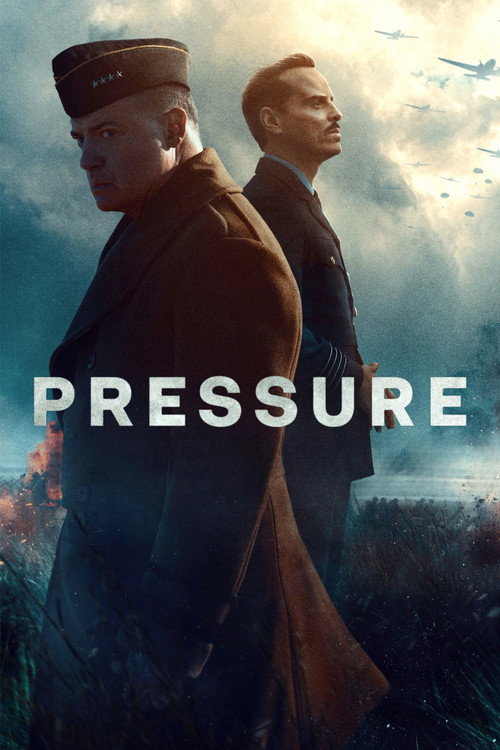
In the seventy-two hours before D-Day, the fate of the largest seaborne invasion in history hangs on a weather forecast. Group Captain James Stagg, the Allies' chief meteorologist, warns General Dwight D. Eisenhower that a storm will strike the English Channel on June 5, 1944, while his American counterpart insists the skies will clear. With 350,000 troops waiting to embark and the tides and moon allowing only a narrow window, Eisenhower must choose whether to launch, delay, or risk catastrophe — a decision that will shape the course of the war.
The seventy-two hours before D-Day, and the most consequential decision of the war turns on a weather forecast. James Stagg, the chief meteorologist, tells Eisenhower the Channel will storm on the planned date; his American counterparts disagree; and the invasion of Europe waits on which man reads the sky correctly.
Anthony Maras builds a war film out of briefing rooms, telephone calls, and barometric charts, and finds the tension honestly — this is a story about expertise, doubt, and the weigh...
Help us keep this page accurate
See something missing or incorrect? Email us what you’re seeing and we’ll review it.